We understand your time is valuable, and the last thing you need is a drawn-out panel replacement process eating into your day. That’s why our locally owned Ashgrove team arrives prepared and completes every panel swap efficiently for homes and businesses nearby. No wasted trips, no vague timelines — just a skilled crew that genuinely cares about delivering quality work you’ll be happy with long after we leave.
Garage Door Panel Replacement
Why Should Choose Us
Garage Door Ashgrove provides quick, dependable panel replacement for homes and businesses throughout Ashgrove. Get in touch now and let our experienced local crew handle it properly, right through to completion.
Licensed & Insured
Licensed and insured on every job, our panel replacements give Ashgrove homeowners genuine confidence in the outcome.
Fast & Reliable Team
Punctuality and precision go hand in hand with every panel we replace, finished to a seamless standard.
Same-Day Bookings
Dented panel bringing down your curb appeal? Same-day replacements are available across Ashgrove starting today.
Upfront Pricing
Expect complete transparency on panel replacement pricing before we start — no hidden fees, no unpleasant surprises later.
Our Services
We are dedicated to excellence in garage door work.
Reliable panel replacement backed by local experience, quality hardware, and a team that stands behind every swap completed.
Top Quality
Premium hardware and precise fitting ensure every replaced panel performs smoothly for years to come.
100% Guarantee
Every replacement is backed by our workmanship guarantee, giving Ashgrove homeowners genuine peace of mind.
HVAC Certificat
Our fully licensed technicians carry proper insurance, so every job is handled with real accountability.
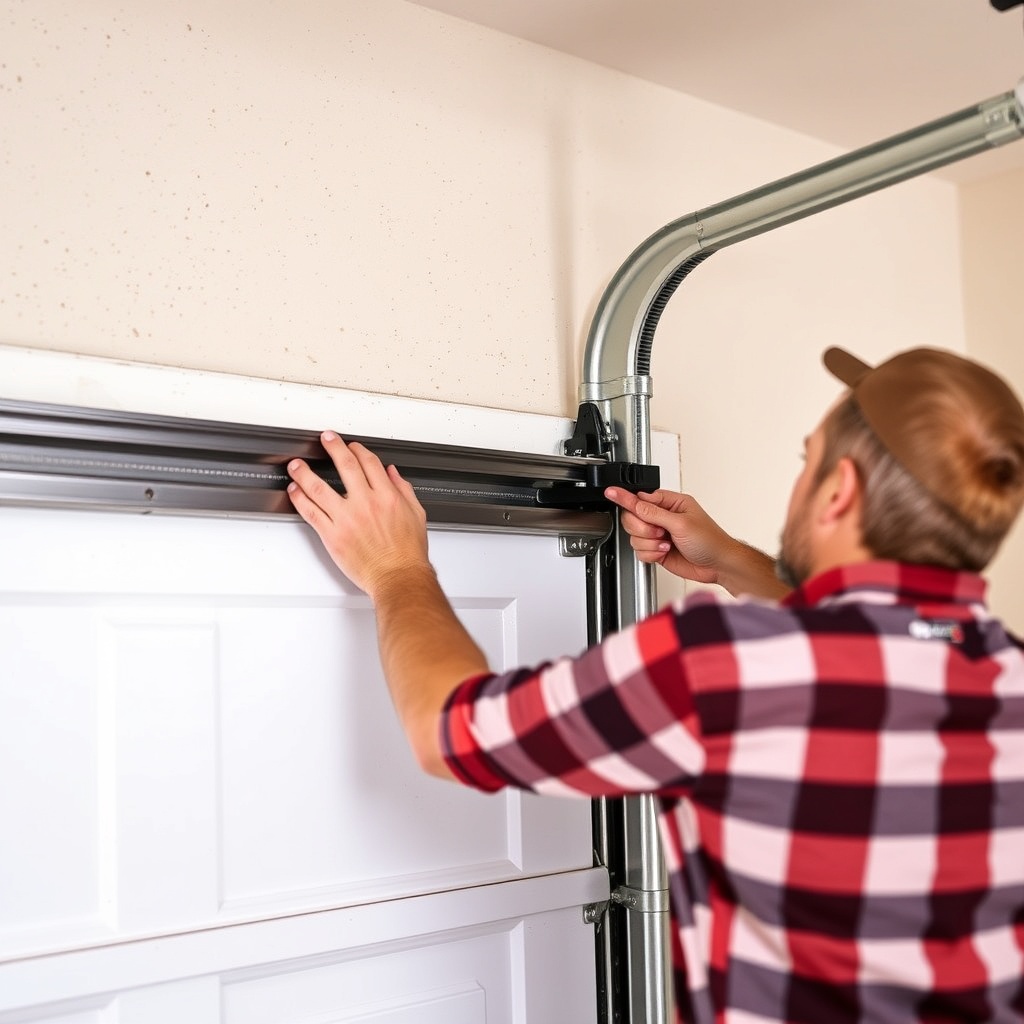
Fast Service, Honest Pricing — Call Ashgrove Garage Door Panels & Get A Free Quote Today!
Our Work Process
What Sets Garage Door Ashgrove's Panel Work Apart?
Panel replacement stays simple with us. Ashgrove homeowners get a direct, no-fuss process — no confusing steps, no drawn-out communication — just a smooth path to a door that looks brand new.
Book Your Installation
We Show Up & Get Started
Job Done, You're Happy
Damaged Panel Affecting Your Whole Door? Expert Replacement in Ashgrove
Ashgrove’s established residential environment is one where garage door panels face a distinctive combination of damage risks that differs meaningfully from what panels experience in Brisbane’s outer suburbs. Narrow driveway approaches on sloping blocks that bring vehicles within centimetres of door panels on every entry and exit. Rear lane or carport configurations that concentrate moisture, organic debris, and the occasional impact from lane traffic into a confined space directly adjacent to the door. Dense street tree canopies that create sustained UV shade on some panel faces while leaving others in full sun — creating uneven weathering patterns across the same door. And Brisbane’s demanding sub-tropical climate that cycles panels through intense thermal expansion, heavy storm moisture exposure, and high UV degradation across every year of their service life. When panel damage occurs in this environment — and it will, on almost every Ashgrove property over a long enough time horizon — the question is not whether to address it but how quickly and correctly it can be resolved before the damage that began in one panel spreads to the components around it. At Garage Door Ashgrove, we carry out professional garage door panel replacement across Ashgrove and Brisbane’s inner west with the precision and whole-system awareness that Ashgrove’s specific property context demands.
Ashgrove’s Specific Panel Damage Environment
The Narrow Driveway and Sloping Approach Problem Ashgrove’s undulating topography and established residential layouts were not designed with modern vehicle dimensions and sloping gradients in mind. Driveways that feature distinct angles and narrow boundary clearances now accommodate SUVs and light commercial vehicles that leave minimal side clearance on each entry and exit. The result is a persistent pattern of low-speed, low-force vehicle contact with garage door panels — door mirrors catching the panel edge during a slightly wide turn, the rear corner of a high-sided vehicle grazing the panel during a tight reversing manoeuvre on an incline, or a vehicle making contact in a confined space. These contacts are individually minor but cumulatively significant. A panel that has absorbed ten or fifteen minor contact events over five years of Ashgrove driveway use has accumulated surface damage, edge deformation, and coating system fatigue that leaves it structurally weaker than its appearance from the street might suggest — and more vulnerable to a single more significant impact that pushes it past the threshold of functional damage.
Sub-Tropical Moisture and Debris Exposure Ashgrove’s rear lane and established garden garage installations present panels — particularly the lower panels closest to the ground surface — to moisture and debris conditions that drier locations do not experience at the same intensity. Sloping driveways and lanes accumulate organic debris from overhanging trees and create a localised microclimate of elevated moisture at the base of the door structure during heavy summer downpours. This moisture environment accelerates surface coating degradation on steel panels at the bottom of the door stack, creates conditions for rust development once coating integrity is compromised, and subjects weatherseals to faster deterioration than installations in equivalent drier service periods.
UV Exposure Patterns Across Ashgrove’s Streetscape Ashgrove’s established street tree canopy creates complex UV exposure patterns for garage door panels. A door positioned in full sun exposure on a west or north-facing frontage experiences sustained UV load that degrades paint systems, chalks Colorbond finishes, and fatigues rubber weatherseals at a rate significantly higher than the same door in a shaded rear lane position. Understanding these exposure patterns is relevant to panel replacement decisions — a front-facing panel in full sun exposure may need replacement sooner than a shaded panel of the same age simply because the thermal and UV load it has experienced is several times greater.
How Panels Fail in Ashgrove Properties
Structural Deformation From Vehicle Contact The most common failure mode for Ashgrove garage door panels — concentrated structural deformation from vehicle impact at a specific contact point on a sloping driveway. Unlike the distributed surface degradation of weathering, impact deformation creates a discrete change in the panel’s geometry at the point of contact — a crease that introduces an angular discontinuity in the panel face, a buckle that causes the panel to bow out of the plane of the door stack, or an edge deformation that pushes the panel out of correct alignment with the track channel running alongside it. The mechanical consequences of this geometric change ripple outward from the deformation point. The hinges connecting the deformed panel to adjacent panels are forced to operate at articulation angles outside their design range on every cycle. The rollers on the side of the door adjacent to the deformation are subjected to lateral loads from the panel edge that is no longer tracking correctly within the track channel clearance zone. The panel above the deformed section sits at a slightly different angle than its design position — affecting the alignment of every panel above it in the stack and the door’s overall seal geometry when closed.
Surface Coating Failure Leading to Corrosion The paint system protecting a Colorbond steel panel consists of a zinc coating applied at the steel mill, a primer coat, and a top Colorbond colour coat — a layered system designed to provide durable corrosion protection across a panel’s expected service life. In Ashgrove’s combination of high UV exposure, sub-tropical moisture cycling, and the mechanical abrasion of narrow sloping driveways, this protective system degrades at a rate that varies significantly between panels on the same door depending on their specific exposure conditions.
How Coating Failure Progresses Once the Colorbond colour coat begins to chalk or crack — typically first visible at panel edges and corners where stress concentrations are highest — the underlying primer layer is exposed to UV and moisture. As the primer layer deteriorates, the zinc coating beneath it is exposed. When the zinc layer is breached — through a combination of UV degradation, mechanical abrasion, and sub-tropical storm moisture — bare steel is exposed and rust development begins immediately. Rust on a garage door panel is a progressive condition — the oxidation front advances outward from the initial breach point, weakening the panel material as it progresses and creating a structural weakness that makes the affected area more vulnerable to impact deformation.
Thermal Fatigue in High-UV West-Facing Installations Ashgrove’s west-facing front-installation panels experience intense thermal cycling — summer afternoon sun heating the panel surface to temperatures that can exceed 70 degrees Celsius on dark Colorbond finishes, followed by rapid cooling during afternoon storm cells. The steel panel expands and contracts through this full temperature range on every diurnal cycle — a cumulative fatigue stress that over years of service creates micro-cracking in the paint system, progressive surface distortion in thin-gauge panels, and stress concentration points at panel edges and fastener locations that make the panel more vulnerable to both impact damage and coating delamination.
Assessing Panel Damage in an Ashgrove Property Context
When Individual Panel Replacement Is the Right Answer Individual panel replacement delivers the right outcome for an Ashgrove property when the damage is clearly contained, the door system is otherwise sound, and matching replacement panels are available for the specific door.
Conditions Favouring Individual Panel Replacement:
Single panel structural deformation from a discrete vehicle impact event on a sloping drive with adjacent panels confirmed undamaged on inspection
Door age under ten years with the undamaged panels retaining their surface coating integrity and structural soundness
Matching replacement panels available from the manufacturer or a compatible supplier in the correct Colorbond colour, gauge, and insulation specification
Mechanical system in good condition with springs correctly tensioned, cables without fraying, tracks aligned, rollers serviceable, and opener functioning within its designed load parameters
Heritage or aesthetic constraints on an Ashgrove property where matching the existing door style is a genuine consideration — individual panel replacement preserving the existing door’s character is preferable to full replacement with a non-matching new door
When Full Door Replacement Is the Smarter Decision
Conditions Favouring Full Door Replacement:
Multiple panels damaged across the door stack — the cumulative replacement cost approaches or exceeds a complete new door with full warranty coverage
Colorbond colour discontinued — the existing door’s colour is no longer in the current Colorbond range, making a matched replacement panel unavailable and leaving mismatched colour as the only individual replacement outcome
Door over fifteen years old with the undamaged panels showing significant UV degradation, coating system fatigue, and thermal cycling wear — individual panel replacement in an aged door simply defers the inevitable full replacement
Existing door uninsulated — upgrading to a modern insulated sectional door delivers thermal performance improvement that is particularly relevant in Ashgrove where garages are increasingly used as habitable or workspace extensions of the home
Architectural or character overlay requirements on an Ashgrove property where a full door replacement with a more appropriate period-style door is preferable to panel replacement that perpetuates an unsympathetic existing door style
Our Panel Replacement Process in Ashgrove
Comprehensive Pre-Replacement Assessment Before any panel is ordered, we conduct a complete inspection of the damaged panel and the surrounding door structure — checking adjacent panels for transmitted deformation from the impact event, the track above the damage zone for displacement, the hinges connecting the damaged panel for fatigue cracking, the rollers on the affected side for wear caused by operating against a misaligned panel, and the spring anchor bracket where vehicle impact is the damage cause. We also assess the acoustic environment implications of the panel replacement — confirming that the replacement panel’s weight specification matches the existing door’s balance calibration so that spring tension and opener force settings remain correct after replacement without requiring full recalibration.
Panel Sourcing and Colour Matching We identify the correct replacement panel specification — width, height, material gauge, insulation rating, and Colorbond colour — and confirm availability before scheduling the installation visit. Where the existing door’s Colorbond colour has weathered significantly, we advise on the expected colour differential between the new replacement panel and the aged originals — giving Ashgrove homeowners a realistic expectation of the visual outcome before the replacement proceeds.
Spring Tension Management Before Any Panel Work Spring tension is safely managed and controlled before any panel removal begins. This step is performed first on every panel replacement job, without exception — removing a panel from a door under full spring tension creates an immediate structural imbalance that makes the remaining panel stack dangerous to handle and the replacement process unsafe to execute. De-tensioning the spring system before panel work begins is what makes the replacement process mechanically safe.
Panel Removal, Installation, and Alignment The damaged panel is disconnected from adjacent panels by removing the connecting hinges, rollers are extracted from the track channel, and the section is carefully removed from the door stack. The replacement panel is positioned correctly, rollers are fitted and seated in the track, and hinges are connected to the panels above and below with correctly torqued fasteners. The full panel stack is checked for level, correct track clearance, and flush face alignment before the spring system is returned to operating tension.
Operational Testing Across All Systems The door is cycled through multiple complete open and close movements after installation — confirming smooth travel without binding or resistance at any point, correct balance, even cable tension on both sides, proper weatherseal contact across the full bottom edge, and correct safety sensor and opener function. Any adjustment identified during testing is completed before the job is signed off.
Garage Door Panel Replacement Across Ashgrove and Brisbane’s Inner West
We carry out panel replacement throughout Ashgrove, The Gap, Bardon, Paddington, Red Hill, Enoggera, Alderley, Newmarket, St Lucia, and Indooroopilly.
A damaged garage door panel in Ashgrove’s specific residential environment — with its narrow sloping driveways, sub-tropical storm exposures, and intense UV climate — does not stay a localised problem. It draws the surrounding components into its consequences progressively, and the longer it is left, the more expensive the complete resolution becomes. At Garage Door Ashgrove, we assess every panel situation with the whole-system awareness that Ashgrove’s property context demands — giving honest advice on whether individual replacement or a full door upgrade is genuinely the right choice, sourcing correctly matched panels, and completing every installation with the precision and testing the job requires. Serving Ashgrove and Brisbane’s inner west, we are the local specialists homeowners trust to restore their garage door properly.
Help & Info
Clear Answers to Your Panel Questions
How quickly can you respond to a panel replacement?
We offer prompt scheduling for most replacements and can prioritise urgent requests. Call us and we’ll get to you as fast as possible.
Do you replace panels on all types and brands of garage doors?
Yes, we work with a wide range of styles and brands to suit any property.
Do you provide warranties on panel replacements?
Yes, every replacement is backed by a workmanship warranty for genuine peace of mind.
How much does a garage door panel replacement cost?
Pricing depends on the panel type and size, with a free quote provided upfront.
Are your technicians licensed and insured?
Yes, our team is fully licensed and insured for every replacement job.

- Testomonials
What Our Panel Replacement Customers Say
A family member accidentally reversed into the garage and damaged one of the lower panels. Luckily, only that section needed replacing and the new panel looks spot on.
Sarah 
The bottom panel had started looking rough after years of exposure to the weather. Replacing it was a simple way to freshen up the door without replacing the whole thing.
Amanda
Great local company. Honest, reliable, and affordable. The technician serviced our automatic opener, and now the door works smoother than ever
David
From booking to completion, the process was seamless. They provided clear quotes, no hidden costs, and excellent customer service. I’ll definitely use them again.
Karen
- Get A Quote
Book Your Expert Garage Door Panel Replacement Online Today
Ashgrove Garage Door Service delivers expert garage door installations, repairs, and maintenance across Ashgrove and surrounding areas.
Services
Quick Link
Contact
- Address: Ashgrove, Brisbane
- Call: 0748 011 087